
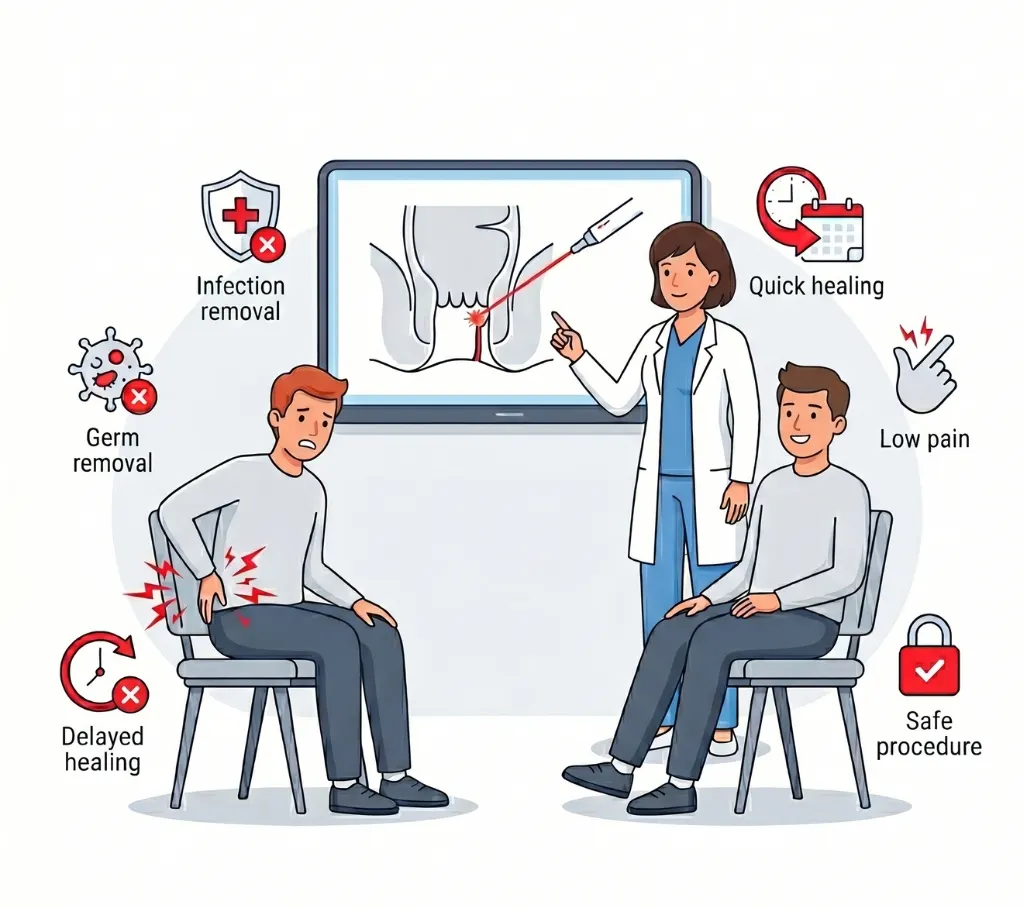
Living with an anal fistula can feel like an ongoing cycle of pain, discomfort, and frustration. From recurring infections to difficulty sitting or walking comfortably, it’s a condition that affects both physical health and daily life.
That’s why understanding Anal Fistula Treatment is so important—not just to manage symptoms, but to find a long-term solution that actually works.
In this guide, we’ll break down everything you need to know in a simple, practical way—so you can make confident decisions about your treatment.
What Is an Anal Fistula and Why Does It Happen?
An anal fistula is a small tunnel that forms between the skin near the anus and the anal canal. It usually develops after an abscess (infection) that doesn’t heal properly.
Medically, this condition is known as Anal fistula.
Common causes include:
- Untreated anal abscess
- Chronic infections
- Conditions like Crohn’s disease
- Trauma or previous surgeries
Once formed, a fistula rarely heals on its own—making proper Anal Fistula Treatment essential.
What Are the Symptoms That Indicate You Need Anal Fistula Treatment?
Many people ignore early signs, assuming it’s a minor issue. But early detection can make treatment much easier.
How do you know if you have a fistula?
Common symptoms:
- Persistent pain near the anus
- Swelling or redness
- Pus or discharge
- Bleeding
- Recurrent boils or abscess
If you notice these symptoms, it’s a strong indication that you may need Anal Fistula Treatment sooner rather than later.
What Are the Different Types of Anal Fistula Treatment Available?
Not all fistulas are the same, so treatment depends on severity and complexity.
1. Medications (Limited Role)
- Used to manage infection or inflammation
- Not a permanent solution
2. Traditional Surgery (Fistulotomy)
- Involves cutting open the fistula tract
- Effective but more invasive
- Longer recovery time
3. Laser Treatment (Modern Approach)
- Minimally invasive
- Faster healing
- Less pain and downtime
Today, many patients prefer advanced Anal Fistula Treatment methods like laser due to better comfort and quicker recovery.
How Does Anal Fistula Treatment Work?
What actually happens during treatment?
The goal of any Anal Fistula Treatment is to:
- Remove infection
- Close the fistula tract
- Prevent recurrence
In laser treatment:
- A laser probe is inserted into the tract
- Energy seals the infected pathway
- Healing happens naturally from inside
This approach minimizes damage to surrounding tissues, making recovery smoother.
Is Anal Fistula Treatment Painful?
This is one of the most common concerns.
Does fistula treatment hurt?
Here’s the reality:
- Procedure is done under anesthesia
- Minimal pain during treatment
- Mild discomfort after procedure
Compared to traditional surgery, modern Anal Fistula Treatment methods are significantly less painful.
What Is the Recovery Time After Anal Fistula Treatment?
Recovery varies depending on the treatment type.
Typical recovery timeline:
- 1–2 days: Resume light activities
- 1 week: Noticeable improvement
- 2–3 weeks: Healing progresses
Laser-based Anal Fistula Treatment allows quicker return to normal life compared to conventional methods.
What Is the Cost of Anal Fistula Treatment in India?
How much does anal fistula treatment cost?
Approximate cost range:
- ₹30,000 to ₹1,20,000 (depending on method and complexity)
Factors affecting cost:
- Severity of the fistula
- Type of treatment (laser vs surgery)
- Hospital and surgeon expertise
- City and facilities
While advanced treatments may cost more, they often reduce long-term complications and recovery time.
Can Anal Fistula Be Treated Without Surgery?
This is a highly searched question.
Is non-surgical anal fistula treatment possible?
The truth:
- Complete healing usually requires a procedure
- Medicines alone cannot close the fistula tract
- Delaying treatment may worsen the condition
However, minimally invasive options like laser offer a middle ground between surgery and comfort.
Is Anal Fistula Treatment Permanent?
👉 Can a fistula come back after treatment?
A properly done Anal Fistula Treatment has a high success rate, but recurrence can happen in some cases.
Factors influencing recurrence:
- Complexity of fistula
- Incomplete healing
- Poor post-treatment care
Regular follow-ups and proper care reduce the chances significantly.
What Should You Do Before and After Anal Fistula Treatment?
Before treatment:
- Follow doctor’s instructions
- Maintain hygiene
- Avoid heavy meals if advised
After treatment:
- Keep the area clean
- Follow medication schedule
- Avoid strain during bowel movements
Good post-care plays a big role in the success of Anal Fistula Treatment.
When Should You See a Specialist?
Don’t wait for symptoms to worsen.
Consult a doctor if you notice:
- Persistent pain or swelling
- Recurrent infections
- Discharge or bleeding
Early diagnosis leads to simpler and more effective treatment.
At Sushrut Piles Hospital, patients are guided through advanced treatment options designed to reduce discomfort and improve recovery outcomes.
Break Free from Pain: A Smarter Approach to Anal Fistula Treatment
Ignoring a fistula won’t make it go away—but choosing the right treatment can.
Modern Anal Fistula Treatment options have made it easier than ever to manage this condition with less pain, faster recovery, and better results. The key is early action, the right approach, and proper care.
If you’ve been delaying treatment due to fear or confusion, now is the time to take control—because the right decision today can save you from long-term discomfort tomorrow.