
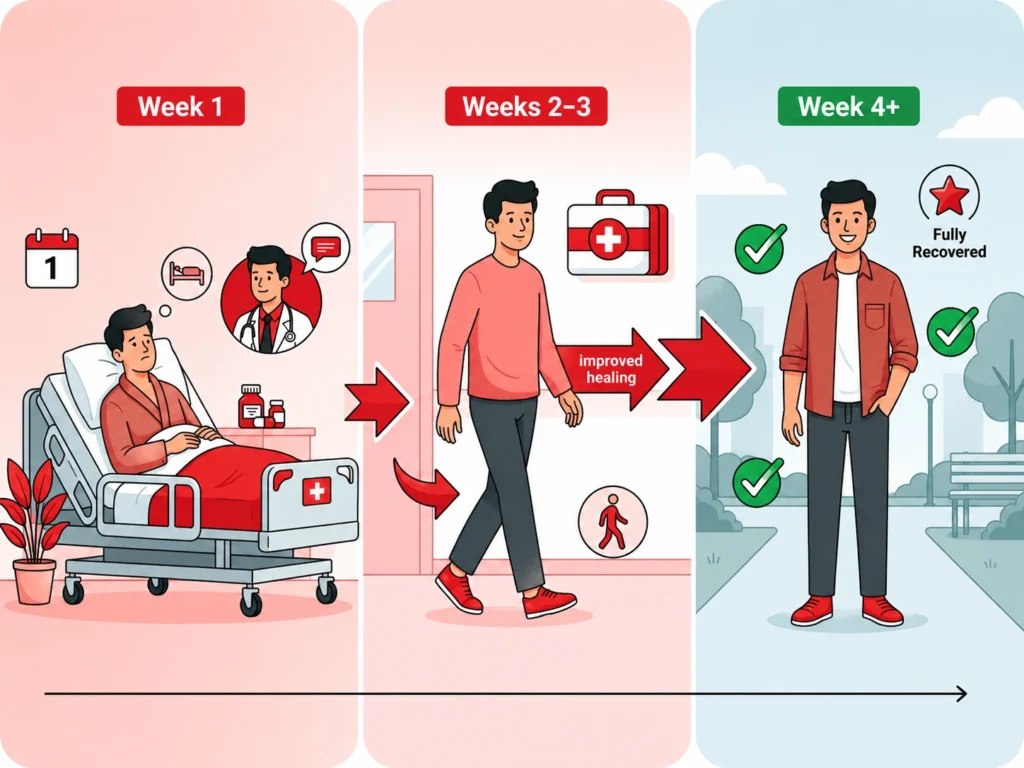
Recovering from a fissure operation is one of the biggest concerns patients have before undergoing treatment. Questions like “How long does fissure surgery take to heal?”, “When can I return to work?”, or “Is pain normal after fissure surgery?” are among the most searched online.
The good news is that most people experience steady improvement when they follow their surgeon’s advice, maintain proper hygiene, and make a few temporary lifestyle changes. While every patient’s recovery timeline is different depending on the type of fissure surgery, overall health, and the severity of the condition, understanding what happens week by week can help reduce anxiety and set realistic expectations.
This guide explains the fissure operation recovery timeline, common symptoms after surgery, healing stages, and practical tips that can help you recover comfortably.
What Happens Immediately After a Fissure Operation?
One of the first questions people ask is, “What should I expect right after fissure surgery?”
Immediately after the procedure, it is normal to experience:
- Mild to moderate discomfort around the surgical area
- Slight bleeding during bowel movements
- Temporary swelling
- Mild burning sensation
- Effects of anaesthesia for a few hours
Depending on the procedure, many patients return home the same day. Doctors usually prescribe pain medication, stool softeners, and dietary instructions to make recovery smoother.
Walking slowly for short periods is generally encouraged because it promotes healthy blood circulation and reduces stiffness.
Week 1 After Fissure Surgery: Is Pain Normal?
The first week is usually the most uncomfortable phase of recovery.
Many patients wonder:
Why does it still hurt after fissure surgery?
During the first few days, your body begins repairing the operated tissue. It is completely normal to experience:
- Pain during bowel movements
- Mild bleeding
- Swelling
- Tenderness while sitting
- Slight discharge from the wound
The discomfort usually starts reducing gradually with proper medication.
Recovery Tips During Week One
- Drink plenty of water.
- Eat high-fibre foods.
- Avoid constipation.
- Take prescribed medicines regularly.
- Use warm sitz baths several times a day.
- Avoid lifting heavy objects.
Most surgeons recommend taking adequate rest but avoiding complete bed rest.
How Long Does It Take for a Fissure Operation Wound to Heal?
Healing is a gradual process rather than an overnight change.
For many patients:
- Initial wound healing begins within the first two weeks.
- Pain reduces significantly after two to three weeks.
- Complete tissue healing may take four to eight weeks.
- Internal healing can continue for several months.
Recovery depends on factors such as:
- Age
- Overall health
- Diabetes
- Nutrition
- Smoking habits
- Following post-operative instructions
- Type of fissure surgery performed
Maintaining soft bowel movements throughout recovery is one of the biggest factors that support faster healing.
Week 2: Does Recovery Become Easier?
Yes, for most patients, the second week feels noticeably better.
Common improvements include:
- Less pain during bowel movements
- Reduced swelling
- Easier walking
- Improved sitting comfort
- Better overall energy
Many people can begin returning to light daily activities during this stage.
However, doctors still recommend avoiding:
- Gym workouts
- Cycling
- Heavy lifting
- Long hours of sitting
- Strenuous physical work
Continuing a fibre-rich diet remains essential because hard stools can slow recovery.
When Can You Return to Work After a Fissure Operation?
This is one of the most frequently searched questions.
The answer depends largely on your profession.
Desk Jobs
People with office jobs often return within:
- 5–10 days
- Sometimes earlier if pain is minimal
Taking short walking breaks every hour can reduce pressure on the healing area.
Physically Demanding Jobs
If your work involves:
- Heavy lifting
- Construction
- Warehouse activities
- Long hours of standing
Your doctor may advise waiting around 2–4 weeks before resuming full duties.
Always follow your surgeon’s advice rather than comparing your recovery with someone else’s.
Week 3: What Changes During This Stage of Recovery?
By the third week, many patients report feeling significantly more comfortable.
You may notice:
- Minimal pain
- Little or no bleeding
- Better bowel movement comfort
- Improved mobility
- Reduced dependence on pain medication
The surgical wound continues healing internally, so although symptoms improve, complete recovery is still in progress.
Many patients mistakenly stop following dietary recommendations once pain reduces. Continuing healthy habits helps prevent future fissures.
Can You Sit Normally After Fissure Surgery?
Yes, but not immediately.
During the first week:
- Sitting for prolonged periods may feel uncomfortable.
- Soft cushions can help reduce pressure.
- Frequent position changes are beneficial.
By the second and third weeks, sitting generally becomes much easier.
If your work requires long sitting hours, standing and stretching every 45–60 minutes can improve comfort.
Week 4: Are You Almost Fully Recovered?
Around one month after surgery, many patients resume most normal activities.
You may experience:
- Nearly pain-free bowel movements
- Minimal discomfort
- Normal walking
- Better sleep
- Increased confidence in daily routines
However, internal healing may continue even if symptoms have disappeared.
Your doctor may schedule a follow-up appointment to confirm that healing is progressing well.
What Foods Help Fissure Surgery Recovery?
Diet plays an important role in preventing constipation and supporting healing.
Foods commonly recommended include:
- Oats
- Whole grains
- Fresh fruits
- Papaya
- Apples
- Pears
- Bananas
- Leafy green vegetables
- Lentils
- Yogurt
- Plenty of water
Foods to limit temporarily include:
- Very spicy meals
- Processed foods
- Fried snacks
- Excess cheese
- Low-fibre fast food
A balanced diet keeps bowel movements soft and reduces strain on the healing tissues.
What Activities Should You Avoid During Recovery?
Many patients search for “What should not be done after fissure surgery?”
During recovery, doctors often advise avoiding:
- Heavy weightlifting
- Strenuous exercise
- Constipation
- Ignoring the urge to pass stools
- Smoking
- Excessive alcohol
- Sitting continuously for long periods
- Poor hydration
Gradually returning to normal activities is usually safer than rushing back into an intense routine.
What Are the Warning Signs That Need Medical Attention?
While most recoveries progress smoothly, certain symptoms should not be ignored.
Contact your healthcare provider if you experience:
- Heavy bleeding
- Increasing pain instead of gradual improvement
- High fever
- Pus-like discharge
- Persistent swelling
- Difficulty passing urine
- Severe constipation lasting several days
Early medical attention can prevent complications and support better healing outcomes.
Can a Fissure Come Back After Surgery?
Patients often ask whether surgery permanently cures anal fissures.
Although surgery has a high success rate, recurrence is still possible if underlying habits remain unchanged.
Factors that may increase recurrence include:
- Chronic constipation
- Low-fibre diet
- Poor hydration
- Repeated straining
- Untreated digestive issues
Long-term lifestyle improvements greatly reduce the chances of developing another fissure.
Healthcare providers at Sushrut Piles Hospital often emphasise that successful recovery is not only about the operation itself but also about maintaining healthy bowel habits after healing.
How Can You Speed Up Recovery After a Fissure Operation?
Many people search for ways to heal faster after fissure surgery.
Simple habits that support recovery include:
- Drinking 2–3 litres of water daily (unless advised otherwise)
- Eating fibre-rich meals
- Taking prescribed stool softeners
- Walking for short durations
- Using warm sitz baths
- Maintaining proper hygiene
- Attending follow-up appointments
- Avoiding constipation at all costs
Consistency with these habits often contributes to a smoother recovery than relying on medication alone.
From Recovery to Relief: Every Week Brings You Closer to Comfort
Recovering from a fissure operation is a gradual journey, but knowing what to expect week by week can make the process much less stressful. While the first week may involve discomfort, most patients notice steady improvements in pain, mobility, and bowel movements over the following weeks. Following your surgeon’s instructions, maintaining a fibre-rich diet, staying hydrated, and avoiding strain all contribute to a smoother recovery.
If symptoms persist longer than expected or new concerns develop, timely medical evaluation is always the safest approach. With proper post-operative care and healthy lifestyle habits, many patients are able to return to their daily routines comfortably and reduce the risk of future fissure problems. When seeking experienced guidance and comprehensive treatment, Sushrut Piles Hospital supports patients through every stage, from surgery to complete recovery.