
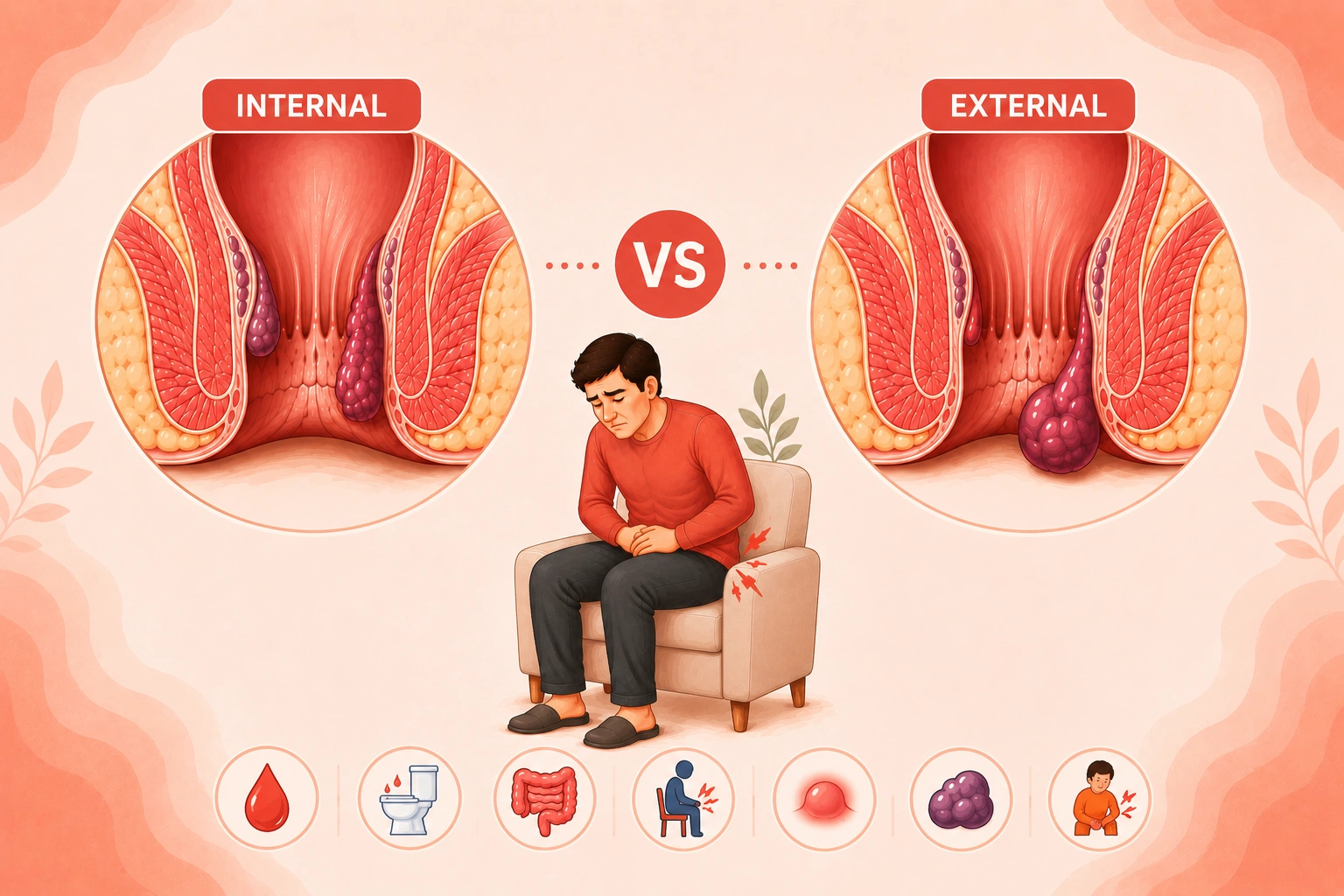
The main difference between internal and external hemorrhoids is where they develop. Internal hemorrhoids form inside the lower rectum or anal canal, while external hemorrhoids develop under the skin around the anus.
Internal hemorrhoids commonly cause bright red rectal bleeding and may not be painful. External hemorrhoids are more likely to cause pain, tenderness, itching, swelling, or a lump near the anus.
Both types are common and can often be managed with lifestyle changes or medical treatment. However, persistent bleeding, severe pain, or recurring symptoms should be evaluated by a qualified doctor.
What Are Internal Hemorrhoids?
Internal hemorrhoids are swollen veins that develop inside the lower rectum or anus. Because the area where they develop has fewer pain-sensitive nerves, they may not cause pain in their early stages.
The most common symptom is bright red blood during or after a bowel movement. You may notice blood on toilet paper, on the surface of the stool, or in the toilet bowl.
Sometimes, an internal hemorrhoid becomes enlarged and pushes through the anus. This is called a prolapsed hemorrhoid. Depending on its severity, it may return inside on its own or may need to be gently pushed back by hand.
According to the National Institute of Diabetes and Digestive and Kidney Diseases (NIDDK), symptoms and treatment can vary depending on the type and severity of hemorrhoids.
What Are External Hemorrhoids?
External hemorrhoids develop under the skin around the anus. They can be easier to notice because they may appear as a swollen or tender lump.
Common symptoms include:
- Pain or discomfort around the anus
- Itching or irritation
- Swelling
- Tenderness
- A lump near the anus
- Bleeding in some cases
An external hemorrhoid can sometimes develop a blood clot. This is called a thrombosed external hemorrhoid and can cause sudden, severe pain and swelling.
If you develop a painful lump or sudden severe symptoms, it is better to consult a doctor rather than trying to treat the condition yourself.
Internal vs External Hemorrhoids: Key Differences
Difference | Internal Hemorrhoids | External Hemorrhoids |
Location | Inside the anus or lower rectum | Under the skin around the anus |
Common symptom | Bright red bleeding | Pain, itching, swelling, or lump |
Pain | Often painless initially | More commonly painful |
Visible lump | Usually not visible unless prolapsed | May be visible or felt |
Blood clot | Less common | Can cause thrombosis |
Diagnosis | May require internal examination | Often visible during examination |
The symptoms can overlap, so it is not always possible to identify the type of hemorrhoid based on symptoms alone.
What Causes Internal and External Hemorrhoids?
Both types can develop when there is increased pressure on the veins around the anus and lower rectum.
Common risk factors include:
- Constipation
- Chronic diarrhea
- Straining during bowel movements
- Sitting on the toilet for long periods
- Low-fiber diet
- Pregnancy
- Aging
- Regular heavy lifting
Eating enough fiber, drinking adequate fluids, staying physically active, and avoiding unnecessary straining can support healthier bowel movements.
What Are the Symptoms of Hemorrhoids?
Hemorrhoid symptoms can differ depending on whether they are internal or external.
Internal hemorrhoid symptoms may include:
- Bright red rectal bleeding
- Prolapse during bowel movements
- Irritation or discomfort
- Mucus or difficulty cleaning the area in some cases
External hemorrhoid symptoms may include:
- Pain
- Itching
- Swelling
- Tenderness
- A lump around the anus
- Bleeding in some cases
If you have rectal bleeding, do not automatically assume that hemorrhoids are the cause. Other digestive conditions can also lead to bleeding.
How Are Hemorrhoids Diagnosed?
A doctor usually begins by asking about your symptoms, bowel habits, medical history, and lifestyle.
External hemorrhoids can often be identified by examining the area around the anus. Internal hemorrhoids may require a digital rectal examination or an examination using an anoscope.
Proper diagnosis is important because anal pain, bleeding, or a lump can sometimes be caused by conditions other than hemorrhoids.
How Are Internal and External Hemorrhoids Treated?
Treatment depends on the type and severity of hemorrhoids.
For mild symptoms, doctors may recommend:
- Increasing dietary fiber
- Drinking enough water
- Avoiding straining during bowel movements
- Spending less time on the toilet
- Taking warm sitz baths
- Using appropriate medicines or topical treatments when advised
If internal hemorrhoids do not improve, a doctor may recommend procedures such as rubber band ligation, sclerotherapy, infrared treatment, or electrocoagulation. Severe or persistent cases may require surgery.
At Sushrut Piles Hospital, patients can discuss their symptoms with a qualified doctor and understand which treatment approach may be appropriate for their condition.
When Should You See a Hemorrhoid Specialist?
You should consult a hemorrhoid specialist if:
- Rectal bleeding keeps happening
- Pain is severe or getting worse
- A lump remains or becomes increasingly swollen
- Symptoms keep returning
- Home care does not provide relief
- You are unsure whether your symptoms are caused by hemorrhoids
If you have severe anal pain with rectal bleeding, particularly along with abdominal pain, diarrhea, or fever, seek medical attention promptly.
If you are searching for a hemorrhoid doctor near me, look for a qualified specialist who can evaluate the cause of your symptoms rather than relying only on self-diagnosis.
Frequently Asked Questions
Are internal or external hemorrhoids worse?
Neither type is automatically worse. Severity depends on the size, symptoms, complications, and whether the hemorrhoids are recurring. A doctor can determine the severity through an appropriate examination.
Which hemorrhoids cause more pain?
External hemorrhoids are generally more likely to cause pain because they develop in an area with more pain-sensitive nerves. A thrombosed external hemorrhoid can be particularly painful.
Which hemorrhoids cause bleeding?
Internal hemorrhoids commonly cause bright red rectal bleeding, especially during or after bowel movements. However, rectal bleeding can have several causes, so persistent bleeding should be evaluated by a doctor.
Can internal hemorrhoids become external?
An internal hemorrhoid can prolapse through the anal opening. This can create a lump outside the anus, but a prolapsed internal hemorrhoid is different from an external hemorrhoid that originally developed under the skin.
Can hemorrhoids go away on their own?
Mild hemorrhoids may improve with dietary and lifestyle changes, particularly by preventing constipation and avoiding straining. Persistent or severe symptoms may require medical treatment.
When should I see a hemorrhoid doctor?
See a doctor if you have persistent bleeding, significant pain, recurring hemorrhoids, a painful lump, or symptoms that do not improve with basic home care.
Final Takeaway
Internal hemorrhoids develop inside the anus or lower rectum, while external hemorrhoids develop under the skin around the anus. Internal hemorrhoids commonly cause painless bright red bleeding, whereas external hemorrhoids are more likely to cause pain, itching, swelling, or a lump.
Knowing the difference can help you understand your symptoms, but it should not replace a professional diagnosis. If symptoms persist or you are concerned about rectal bleeding, consult a hemorrhoid specialist for proper evaluation and treatment.