
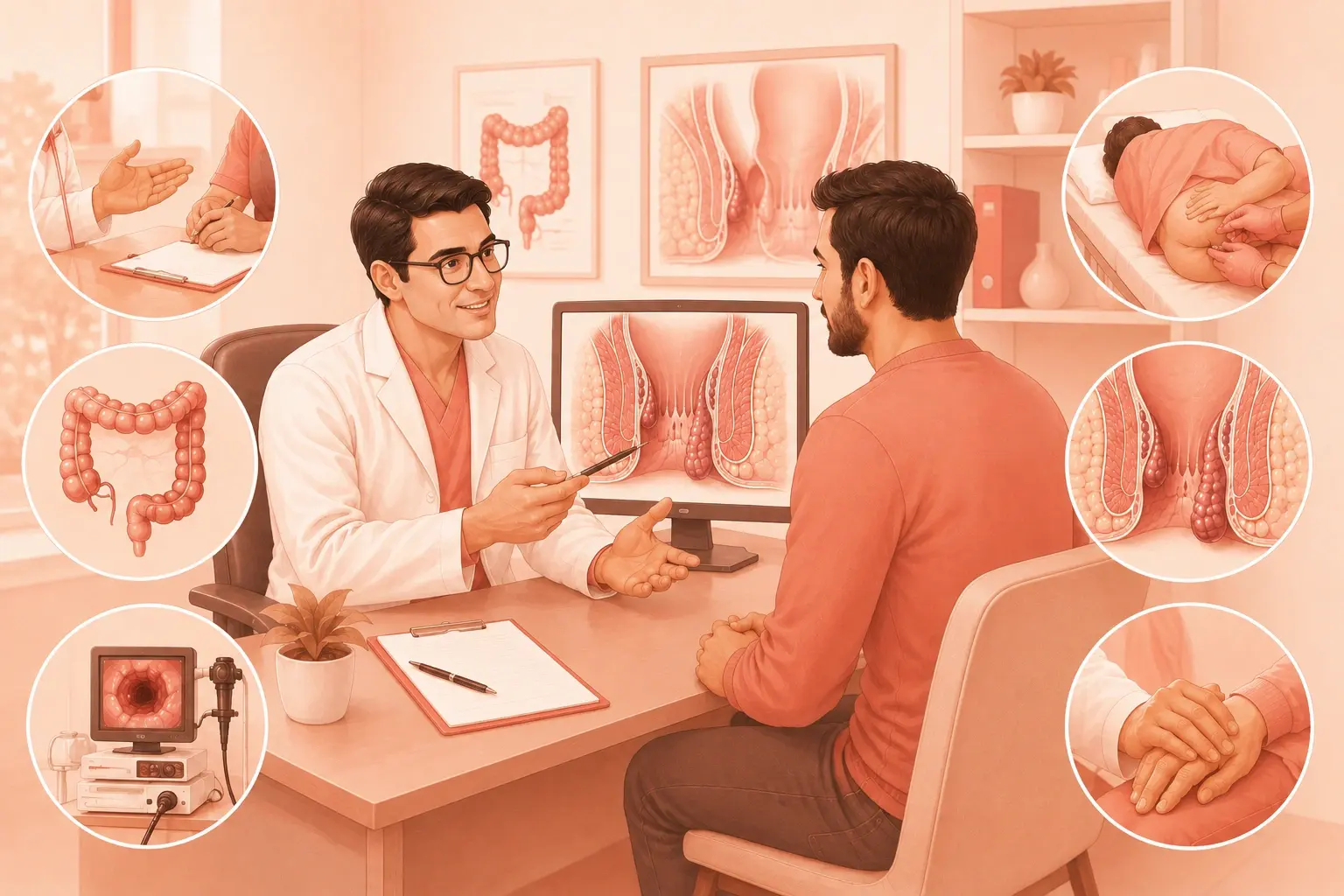
If you have piles, rectal bleeding, anal pain, swelling, or discomfort while passing stool, you may wonder which doctor can help. A proctologist is a specialist who diagnoses and treats conditions affecting the anus and rectum.
For first-time patients, visiting a proctologist may feel uncomfortable. But there is no need to feel embarrassed. Conditions such as piles, fissures, and fistulas are common medical problems, and early evaluation can help you receive the right treatment.
What Is a Proctologist?
A proctologist is a doctor who specializes in diagnosing and treating diseases and conditions affecting the anus and rectum.
A proctologist may treat:
- Piles or hemorrhoids
- Anal fissures
- Anal fistulas
- Piles and fistula
- Pilonidal sinus
- Anal abscesses
- Rectal bleeding
- Anal pain and swelling
- Persistent anal itching
Depending on the diagnosis, treatment may include lifestyle changes, medicines, minimally invasive procedures, or surgery.
What Does a Proctologist Do?
A proctologist first evaluates your symptoms and medical history. They then examine the affected area when necessary to identify the underlying problem.
The main responsibilities of a proctologist include:
- Understanding your symptoms
- Identifying the cause of the problem
- Diagnosing anorectal conditions
- Explaining available treatment options
- Providing appropriate medical or procedural treatment
- Monitoring recovery and preventing recurrence
The goal is not simply to reduce symptoms but to identify and treat the underlying condition.
When Should You See a Proctologist?
You should consider consulting a proctologist when anal or rectal symptoms persist, become severe, or keep coming back.
Common signs include:
- Blood during or after bowel movements
- Pain while passing stool
- Persistent anal pain
- Swelling or a lump near the anus
- Pus or discharge
- Recurring itching
- Difficulty passing stool
- A wound that does not heal
- Repeated piles
- Recurring swelling or pain
Do not automatically assume that rectal bleeding is caused by piles. A medical examination can help determine the actual cause.
What Happens During a First Proctologist Visit?
During your first appointment, the proctologist will usually begin by discussing your symptoms and medical history.
You may be asked:
- When did the symptoms begin?
- How often do you experience them?
- Do you have pain or bleeding?
- Do you experience constipation?
- Do you strain while passing stool?
- Have you tried any treatment?
- Have you experienced similar symptoms before?
Depending on your symptoms, the doctor may perform a physical examination. Additional tests may be recommended when required.
Your doctor should explain the examination and answer any questions you may have.
Can a Proctologist Treat Piles and Fistula?
Yes. A proctologist can diagnose and treat both piles and anal fistula.
However, these conditions require different approaches. Piles may sometimes respond to lifestyle changes or minimally invasive treatments, while an anal fistula may require a procedure to address the abnormal tract.
The correct treatment can only be decided after proper evaluation.
What Conditions Can a Proctologist Treat?
Piles or Hemorrhoids
Piles are swollen veins in or around the anus and lower rectum. Common symptoms include bleeding, itching, discomfort, and swelling.
Anal Fissure
An anal fissure is a small tear in the anal lining. It commonly causes sharp pain during bowel movements and may cause a small amount of bleeding.
Anal Fistula
An anal fistula is an abnormal connection between the anal canal or rectum and the skin. Persistent discharge, recurring swelling, and pain can be possible symptoms.
Pilonidal Sinus
A pilonidal sinus is a small tunnel or opening in the skin near the tailbone. It can become infected and cause swelling, pain, or discharge.
Anal Abscess
An anal abscess is a collection of pus caused by an infection. It may cause severe pain, swelling, redness, and fever and requires prompt medical evaluation.
What Treatment Does a Proctologist Provide?
Treatment depends on your diagnosis and the severity of your condition.
Possible treatments include:
- Dietary and lifestyle changes
- Increasing fiber intake
- Drinking adequate fluids
- Medicines
- Improving bowel habits
- Minimally invasive procedures
- Surgical treatment when necessary
Not every anorectal condition requires surgery. Your specialist will recommend treatment based on your individual condition.
How Can You Prepare for Your First Appointment?
You usually do not need complicated preparation for a routine consultation.
Before your appointment, make a note of:
- Your symptoms
- When they started
- How frequently they occur
- Bleeding or pain
- Swelling or discharge
- Your bowel habits
- Medicines you currently take
- Previous treatments or procedures
Being open and honest about your symptoms can help your doctor make a more accurate assessment.
Is It Normal to Feel Embarrassed About Seeing a Proctologist?
Yes. Many first-time patients feel uncomfortable discussing problems involving the anal or rectal area.
However, these are medical conditions that specialists manage regularly. Delaying an appointment because of embarrassment may allow a condition to worsen.
A professional consultation gives you a safe opportunity to discuss your symptoms and understand your treatment options.
Why Choose Sushrut Piles Hospital?
Sushrut Piles Hospital provides specialized care for patients experiencing piles, hemorrhoids, fissures, fistulas, pilonidal sinus, and other anorectal conditions.
If you are looking for a piles specialist, hemorrhoid specialist, or proctologist, professional evaluation can help determine the cause of your symptoms and the most suitable treatment approach.
If your symptoms are persistent, recurring, or affecting your quality of life, consider scheduling a consultation rather than continuing to ignore them.
Frequently Asked Questions
What does a proctologist do?
A proctologist diagnoses and treats conditions affecting the anus and rectum, including piles, hemorrhoids, fissures, fistulas, abscesses, and pilonidal sinus.
When should I see a proctologist?
You should see a proctologist if you experience persistent rectal bleeding, anal pain, swelling, discharge, painful bowel movements, recurring piles, or other ongoing anorectal symptoms.
Should I see a piles specialist for hemorrhoids?
Yes. A piles specialist can evaluate your hemorrhoids, determine their severity, and recommend suitable treatment based on your symptoms.
Can a hemorrhoid specialist treat recurring piles?
Yes. A hemorrhoid specialist can assess why piles are recurring and recommend appropriate lifestyle measures, medicines, procedures, or other treatments when necessary.
Can piles and fistula occur together?
Piles and fistula are separate conditions, but a person can have both. Because their symptoms may sometimes overlap, a specialist examination can help establish an accurate diagnosis.
Is rectal bleeding always caused by piles?
No. Rectal bleeding can have several causes. Persistent or unexplained bleeding should be evaluated by a qualified medical professional.
Can piles be treated without surgery?
Some piles can be managed with dietary changes, medicines, lifestyle modifications, or minimally invasive procedures. Treatment depends on the type and severity of the hemorrhoids.
Is a proctologist examination painful?
The level of discomfort depends on your symptoms and the examination required. Your doctor should explain the process and perform the examination carefully.
What should I tell my proctologist?
Tell your doctor about your symptoms, their duration, bleeding, pain, bowel habits, constipation, previous treatments, and any medicines you are taking.
Key Takeaway
A proctologist is a specialist who treats much more than piles. From hemorrhoids and fissures to piles and fistulas, a specialist can help identify the underlying cause of your symptoms and recommend appropriate treatment.
If you have persistent bleeding, pain, swelling, discharge, or recurring symptoms, consulting a piles specialist or hemorrhoid specialist can be an important first step toward proper diagnosis and care.