
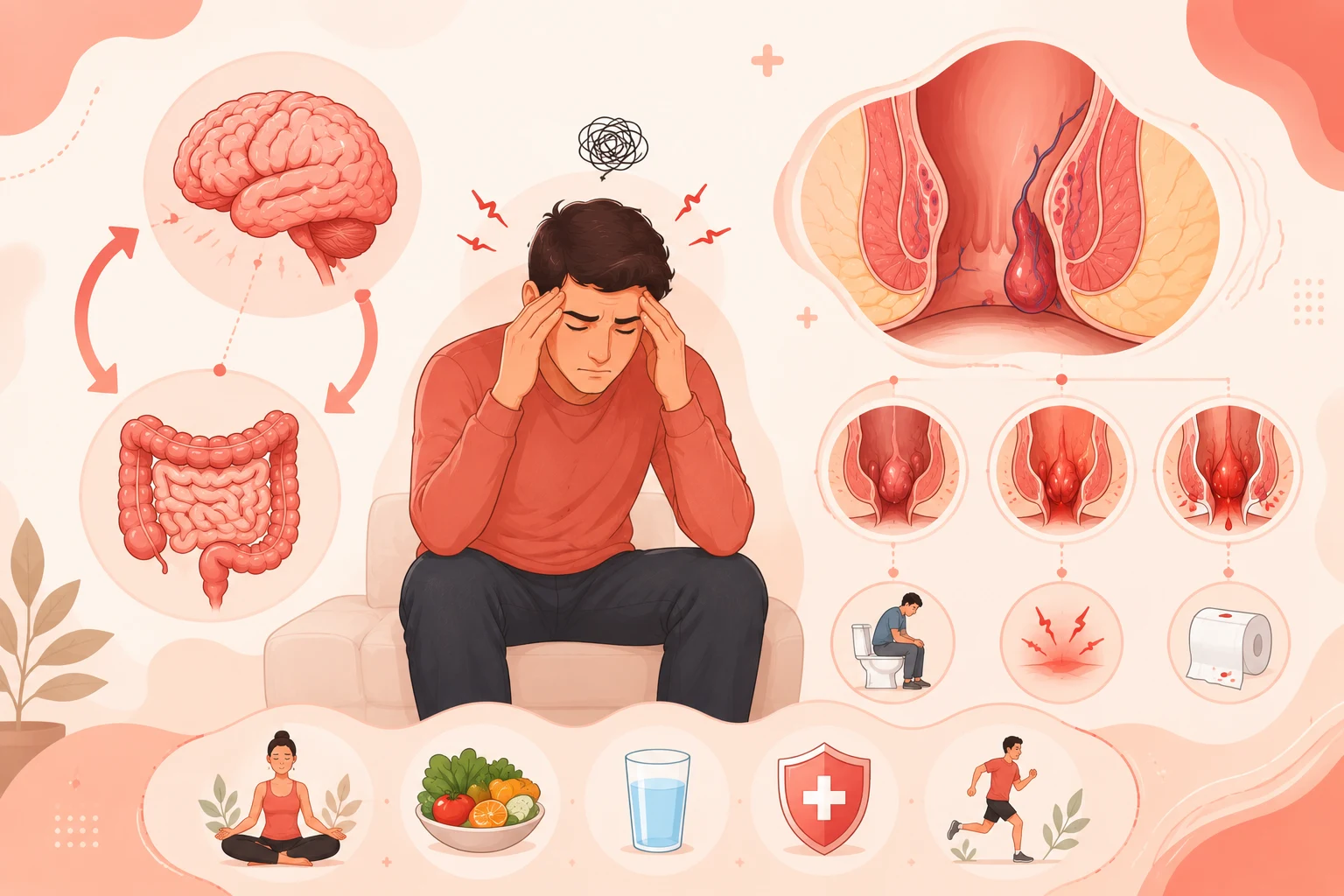
Stress is often associated with headaches, poor sleep, or high blood pressure, but its impact on digestive health is equally significant. Many people living with piles (hemorrhoids) notice that their symptoms seem to worsen during periods of emotional stress, even when their diet hasn’t changed. This raises an important question: Can stress make piles worse?
The answer is yes—indirectly. Stress itself does not cause piles, but it can contribute to digestive changes, constipation, diarrhea, inflammation, and unhealthy bowel habits that may aggravate existing hemorrhoids. Research on the gut–brain connection shows that the digestive system and the brain constantly communicate, meaning emotional stress can influence how your gastrointestinal tract functions.
In this article, we’ll explore the relationship between stress and piles, explain the science behind the gut–brain connection, and discuss practical strategies to reduce symptoms. At Sushrut Piles Hospital, patients receive comprehensive care that addresses not only the physical condition but also the lifestyle factors that may contribute to recurring anorectal disorders.
What Are Piles?
Piles, also known as hemorrhoids, are swollen veins located in the lower rectum or around the anus. They develop when increased pressure causes these veins to enlarge and become inflamed.
Piles are generally classified into two categories:
Internal Piles
Internal hemorrhoids develop inside the rectum and may cause painless bleeding during bowel movements.
External Piles
External hemorrhoids occur under the skin around the anus and can cause pain, swelling, itching, and discomfort.
Common symptoms include:
- Pain during bowel movements
- Bright red bleeding
- Anal itching
- Swelling around the anus
- A lump near the anal opening
- Discomfort while sitting
Many risk factors contribute to piles, including constipation, prolonged sitting, obesity, pregnancy, aging, and low-fiber diets.
Can Stress Make Piles Worse?
Yes, but indirectly.
Stress does not directly create hemorrhoids. Instead, it affects the digestive system in ways that increase pressure on the rectal veins.
When stress becomes chronic, it may lead to:
- Constipation
- Diarrhea
- Muscle tension
- Poor dietary habits
- Reduced physical activity
- Increased inflammation
Each of these factors can aggravate existing piles or make symptoms more noticeable.
Understanding the Gut–Brain Connection
The gut and the brain communicate continuously through a network known as the gut–brain axis. This complex communication system involves the nervous system, hormones, immune responses, and gut bacteria.
When you’re under stress, your brain releases stress hormones such as cortisol. These hormones can influence how quickly food moves through the digestive tract, affect intestinal muscle contractions, and alter the balance of gut microorganisms.
As a result, some people experience constipation, while others develop diarrhea—both of which can worsen hemorrhoid symptoms.
How Stress Can Worsen Piles
1. Stress Can Lead to Constipation
Stress often disrupts normal bowel movements.
Some individuals experience slower intestinal movement, leading to:
- Hard stools
- Difficulty passing stool
- Increased straining
Straining places additional pressure on hemorrhoidal veins, making piles more painful.
2. Stress May Cause Diarrhea
Not everyone responds to stress with constipation.
Some people experience:
- Loose stools
- Frequent bowel movements
- Increased irritation around the anus
Repeated irritation can inflame existing hemorrhoids and increase discomfort.
3. Stress Influences Eating Habits
Many people change their eating patterns when stressed.
Common behaviors include:
- Eating processed foods
- Skipping meals
- Consuming low-fiber snacks
- Drinking less water
Poor nutrition increases the likelihood of constipation and digestive problems.
4. Reduced Physical Activity
Stress often decreases motivation to exercise.
A sedentary lifestyle slows digestion and increases the risk of constipation, which contributes to piles.
Even light daily exercise supports healthy bowel function.
5. Muscle Tension
Stress causes muscles throughout the body to tighten, including the pelvic floor and anal sphincter muscles.
Excessive muscle tension may make bowel movements more difficult and increase discomfort for patients with hemorrhoids.
Signs That Stress May Be Affecting Your Digestive Health
You may notice:
- Irregular bowel movements
- Constipation during stressful periods
- Frequent stomach discomfort
- Increased bloating
- More severe piles symptoms
- Recurring anal pain
- Digestive discomfort before important events
These patterns suggest that stress may be influencing your digestive system.
How to Manage Stress and Reduce Piles Symptoms
Managing stress can improve overall digestive health while reducing factors that aggravate piles.
Eat a High-Fiber Diet
Fiber promotes softer stools and reduces straining.
Include:
- Fruits
- Vegetables
- Whole grains
- Lentils
- Beans
- Oats
A balanced diet supports healthy digestion.
Stay Hydrated
Water helps soften stools and improves bowel regularity.
Aim to drink adequate fluids throughout the day unless advised otherwise by your healthcare provider.
Exercise Regularly
Physical activity stimulates intestinal movement.
Helpful options include:
- Walking
- Yoga
- Cycling
- Swimming
- Stretching
Even 30 minutes of daily activity benefits digestive health.
Practice Stress Management
Healthy stress management techniques may include:
- Deep breathing exercises
- Meditation
- Mindfulness
- Gentle yoga
- Reading
- Spending time outdoors
- Adequate sleep
Reducing stress may improve both mental well-being and bowel function.
Avoid Straining During Bowel Movements
Never force bowel movements.
Healthy bowel habits include:
- Responding promptly to the urge
- Avoiding prolonged sitting on the toilet
- Maintaining regular meal times
These habits reduce pressure on hemorrhoids.
When Should You See a Specialist?
Seek medical evaluation if you experience:
- Persistent rectal bleeding
- Severe pain
- Swelling that worsens
- Recurrent piles
- Symptoms lasting more than one week
- Difficulty passing stools
- Changes in bowel habits accompanied by bleeding
Early diagnosis helps determine whether symptoms are caused by hemorrhoids or another medical condition.
Treatment Options for Piles
Treatment depends on symptom severity.
Options may include:
Lifestyle Changes
Mild cases often improve through:
- Increased fiber intake
- Better hydration
- Exercise
- Healthy bowel habits
Medications
Doctors may prescribe medications to reduce:
- Pain
- Swelling
- Itching
- Inflammation
Minimally Invasive Procedures
Persistent hemorrhoids may require office-based or minimally invasive treatments depending on the grade of the disease.
Surgical Treatment
Advanced hemorrhoids may require surgical intervention when conservative treatments no longer provide adequate relief.
Why Choose Sushrut Piles Hospital?
Choosing an experienced specialist is important for accurate diagnosis and long-term symptom management.
At Sushrut Piles Hospital, patients receive comprehensive evaluation, personalized treatment plans, and evidence-based care for hemorrhoids and other anorectal disorders. The focus extends beyond symptom relief to identifying lifestyle and digestive factors that contribute to recurrence.
Frequently Asked Questions (FAQs)
Can stress directly cause piles?
No. Stress does not directly cause hemorrhoids, but it can contribute to constipation, diarrhea, and unhealthy bowel habits that worsen existing piles.
How does stress affect digestion?
Stress influences the gut–brain connection, altering intestinal movement, digestion, and bowel habits through hormonal and nervous system pathways.
Can reducing stress improve piles symptoms?
Managing stress may reduce constipation and digestive disturbances, which can help minimize irritation and discomfort associated with piles.
What foods help prevent piles?
A diet rich in fiber—including fruits, vegetables, legumes, and whole grains—supports healthy bowel movements and reduces straining.
When should I consult a doctor for piles?
Seek medical advice if you have persistent bleeding, severe pain, recurring symptoms, or changes in bowel habits that do not improve with lifestyle measures.
Conclusion
While stress does not directly cause hemorrhoids, it can significantly influence digestive health through the gut–brain connection. Chronic stress may contribute to constipation, diarrhea, muscle tension, and unhealthy lifestyle habits, all of which can worsen existing piles symptoms. Understanding this relationship allows individuals to take a more comprehensive approach to prevention and treatment.
By maintaining a high-fiber diet, staying hydrated, exercising regularly, managing stress effectively, and seeking timely medical care, many people can reduce symptom flare-ups and improve their overall digestive health. If your symptoms persist or recur frequently, consulting experienced specialists at Sushrut Piles Hospital can help you receive an accurate diagnosis and a personalized treatment plan tailored to your needs.
Meta title – Can Stress Make Piles Worse? Gut-Brain Connection
Meta Description – Learn how stress affects piles through the gut-brain connection, causes digestive issues, and discover effective tips to manage symptoms.