
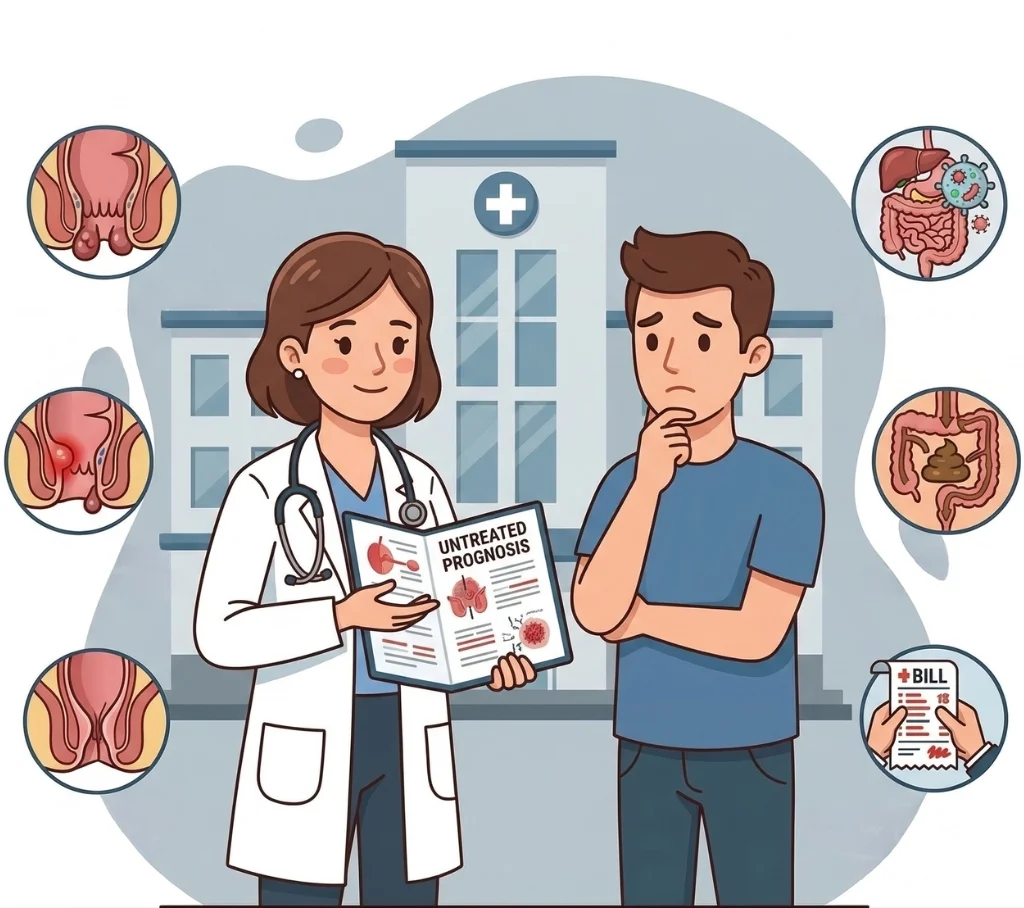
Ignoring early symptoms of piles and fistula might seem harmless at first—but over time, it can lead to serious discomfort, complications, and even the need for surgical intervention. Many people delay treatment due to embarrassment, lack of awareness, or the hope that the condition will resolve on its own. But the reality is quite different.
Let’s understand what actually happens when piles and fistula are left untreated, and why timely care matters more than most people think.
Can Piles and Fistula Heal on Their Own?
In mild cases, early-stage piles (hemorrhoids) may temporarily improve with diet changes, hydration, and lifestyle adjustments. However, chronic piles and fistula rarely heal on their own.
A fistula, in particular, is an abnormal tunnel between the skin and the anal canal, often caused by an untreated infection. Without proper medical care, it persists and worsens over time.
👉 In simple terms: relief is possible, but complete healing without treatment is unlikely, especially in moderate to severe cases.
What Are the Risks of Leaving Piles Untreated?
Untreated piles can gradually progress from mild irritation to a painful and disruptive condition.
1. Increased Pain and Discomfort
Initially, piles may cause itching or mild pain. Over time, this can turn into severe discomfort while sitting, walking, or passing stool.
2. Persistent Bleeding
One of the warning signs of worsening piles is rectal bleeding. Ignoring this can lead to:
- Weakness
- Fatigue
- Iron deficiency anemia in severe cases
3. Prolapsed Hemorrhoids
Untreated piles can progress to prolapse, where the swollen veins protrude outside the anus. This may require manual repositioning—or eventually, surgery.
4. Thrombosis (Blood Clots)
In some cases, piles can develop painful blood clots, leading to sudden swelling and intense pain. This condition often needs urgent medical attention.
What Happens If an Anal Fistula Is Not Treated?
Unlike piles, a fistula is a more serious condition that almost never resolves without treatment.
1. Recurrent Infection
An untreated fistula often leads to repeated infections and abscess formation. You may notice:
- Swelling
- Pus discharge
- Fever in some cases
2. Chronic Pain and Irritation
The constant drainage and inflammation can cause long-term discomfort and skin irritation around the anal area.
3. Formation of Multiple Tracts
If ignored, a fistula can become more complex by forming multiple branching channels, making treatment more difficult later.
4. Risk of Severe Complications
In rare cases, long-standing, untreated fistulas can lead to serious health complications, including systemic infection.
How Do You Know If Your Condition Is Getting Worse?
Recognizing worsening symptoms early can help prevent complications.
Look out for:
- Increased pain during bowel movements
- Continuous or heavy bleeding
- Swelling or lumps near the anus
- Pus or foul-smelling discharge
- Fever or fatigue
If you notice any of these signs, it’s important to seek professional help.
Is It Dangerous to Delay Treatment for Piles and Fistula?
Yes, delaying treatment can make the condition:
- More painful
- Harder to treat
- More expensive in the long run
Early-stage piles can often be managed with non-surgical methods, but advanced cases may require procedures like laser treatment or surgery.
Similarly, fistulas become more complex if not treated early, increasing recovery time and risk.
What Are the Best Treatment Options Available?
Treatment depends on the severity of piles and fistula, but modern medical approaches offer safe and effective solutions.
For Piles:
- Lifestyle and dietary changes
- Medications and topical treatments
- Minimally invasive procedures (like laser treatment)
For Fistula:
- Antibiotics (temporary relief)
- Surgical procedures
- Advanced laser treatments for faster recovery
Hospitals like Sushrut Plies Hospital focus on advanced, patient-friendly treatments that minimize pain and recovery time, helping patients return to normal life quickly.
Can Lifestyle Changes Prevent Complications?
Absolutely. While lifestyle changes alone may not cure advanced conditions, they play a crucial role in prevention and management.
Simple habits that help:
- Eating a high-fiber diet
- Drinking plenty of water
- Avoiding prolonged sitting
- Maintaining proper hygiene
- Not delaying bowel movements
These steps can reduce strain and prevent symptoms from worsening.
When Should You See a Doctor?
Don’t wait for the pain to become unbearable.
You should consult a specialist if:
- Symptoms last more than a few days
- There is bleeding or discharge
- Pain interferes with daily activities
- You notice recurring infections
Early consultation ensures faster recovery and less invasive treatment.
Ignoring Today Can Lead to Surgery Tomorrow
It’s easy to overlook the early signs of piles and fistula, but delaying care often leads to more serious complications, discomfort, and complex treatments. What starts as mild irritation can quickly escalate into a condition that affects your quality of life.
The good news? With the right care at Sushrut Plies Hospital, piles and fistula can be treated safely, helping you get back to a pain-free life.
Don’t ignore the signs—your body is asking for attention.