
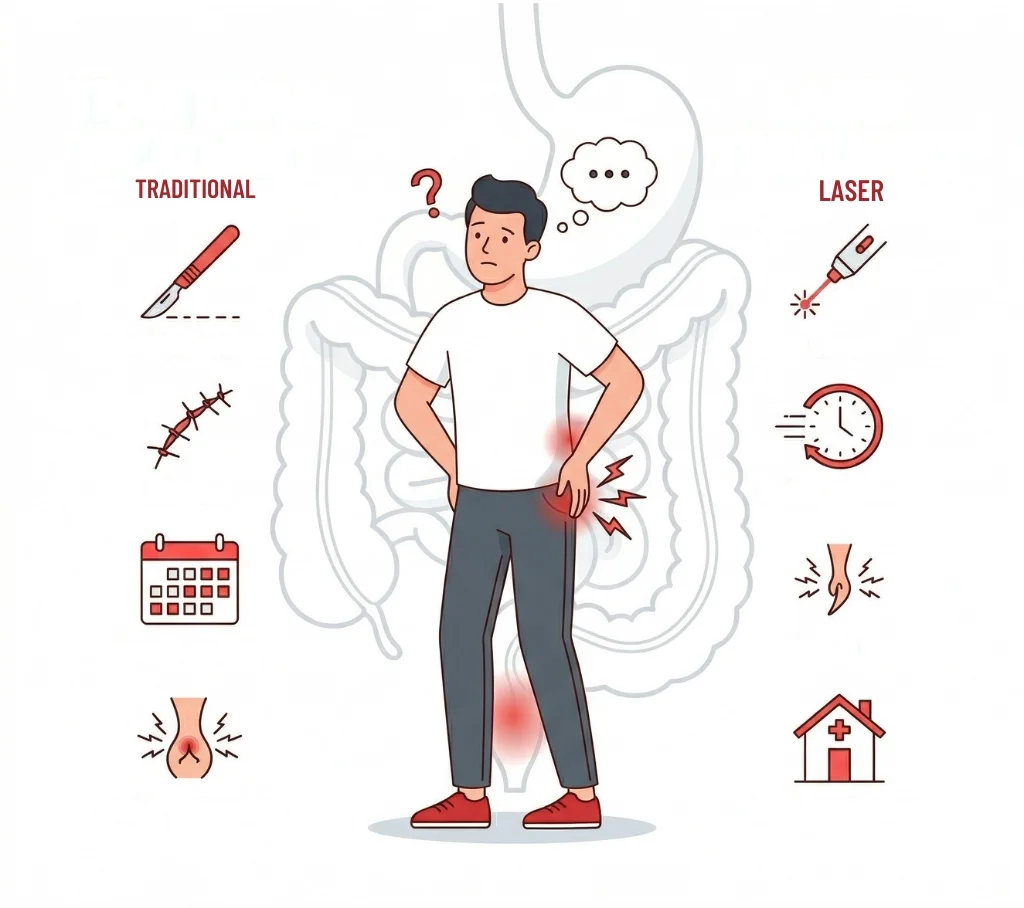
Dealing with an anal fissure can be more painful than people expect. That sharp, burning pain during bowel movements, followed by discomfort that lingers for hours, can disrupt daily life. Naturally, one of the most common questions patients ask is: Which is better—laser or traditional anal fissure treatment?
If you’re exploring options for Anal Fissure Treatment, this guide breaks it down in a clear, practical, and patient-focused way—so you can make an informed decision.
What Is an Anal Fissure and Why Does It Need Treatment?
An anal fissure is a small tear in the lining of the anus, usually caused by passing hard stools, chronic constipation, or excessive straining. While it may sound minor, the pain can be intense.
If left untreated, fissures can become chronic, leading to:
- Repeated tearing during bowel movements
- Muscle spasms in the anal region
- Delayed healing due to poor blood flow
As a result, choosing the right anal fissure treatment in India is important—not just for relief, but for long-term healing.
What Are the Traditional Anal Fissure Treatment Options?
Traditional methods have been used for years and are still effective, especially in the early stages.
1. Medications and Lifestyle Changes
- High-fiber diet and hydration
- Stool softeners
- Pain-relief creams and ointments
These methods work best for acute fissures and early symptoms.
2. Surgical Treatment (Lateral Internal Sphincterotomy)
This is a common surgical procedure where a small portion of the anal muscle is cut to reduce tension and promote healing.
✔ Effective for chronic fissures
❌ May involve:
- Longer recovery time
- Post-surgery discomfort
- Small risk of complications, such as incontinence (rare but possible)
What Is Laser Anal Fissure Treatment?
Laser treatment is a modern, minimally invasive solution for fissures. It uses focused laser energy to treat the affected area with high precision.
At centers like Sushrut Plies Hospital, laser-based anal fissure treatment is designed to:
- Reduce pain
- Promote faster healing
- Minimize tissue damage
How Does Laser Treatment Work for Anal Fissures?
Laser technology helps by:
- Reducing muscle spasm
- Improving blood flow to the area
- Sealing tissues for quicker recovery
The procedure is typically:
- Quick (often completed within 30 minutes)
- Minimally invasive
- Done with less bleeding and discomfort
Which Is Better: Laser or Traditional Anal Fissure Treatment?
Let’s compare both options based on what matters most to patients:
Pain & Comfort
- Laser Treatment: Less pain during and after the procedure
- Traditional Surgery: More post-operative discomfort
Recovery Time
- Laser: Faster recovery, patients resume routine quickly
- Traditional: Longer healing period
Risk Factors
- Laser: Minimal risk, precise treatment
- Traditional: Slightly higher risk due to incision
Effectiveness
- Both are effective—but the laser is often preferred for its comfort and speed
For many patients today, laser anal fissure treatment in India is becoming the preferred choice due to convenience and reduced downtime.
Is Laser Treatment Safe for Anal Fissures?
Yes, laser treatment is considered safe when performed by experienced professionals.
It offers:
- Controlled precision
- Reduced risk of infection
- Minimal damage to surrounding tissues
At Sushrut Plies Hospital, advanced techniques are used to ensure patient safety and effective outcomes.
Who Should Choose Laser Anal Fissure Treatment?
Laser treatment is ideal if you:
- Have a chronic anal fissure
- Experience recurring pain
- Want a minimally invasive procedure
- Prefer faster recovery with less downtime
However, early-stage fissures may still heal with medications and lifestyle changes.
How Long Does It Take to Recover from Anal Fissure Treatment?
Recovery depends on the treatment type:
- Laser Treatment:
- Recovery in a few days
- Minimal discomfort
- Quick return to routine
- Traditional Surgery:
- May take a few weeks
- Requires more post-operative care
Can Anal Fissures Come Back After Treatment?
Yes, recurrence is possible—especially if lifestyle habits don’t change.
To prevent recurrence:
- Maintain a fiber-rich diet
- Stay hydrated
- Avoid straining during bowel movements
- Follow post-treatment care properly
Is Laser Treatment More Expensive Than Traditional Methods?
Laser treatment may seem slightly higher in cost initially, but it often:
- Reduces hospital stay
- Minimizes medication needs
- Helps you return to work faster
So, in many cases, it becomes cost-effective in the long run.
When Should You See a Doctor for Anal Fissure Treatment?
You should seek medical help if:
- Pain persists for more than a few days
- There is bleeding during bowel movements
- Home remedies are not working
- The fissure keeps recurring
Early treatment can prevent complications and avoid surgery.
Modern Care Makes Healing Easier
Choosing between laser and traditional Anal Fissure Treatment depends on your condition, pain level, and recovery expectations. While traditional methods still have their place, modern laser treatment offers a more comfortable, faster, and patient-friendly approach.
At Sushrut Plies Hospital, the focus is on providing advanced treatment options tailored to each patient—helping you recover with less pain and more confidence.
The sooner you act, the easier the recovery.