
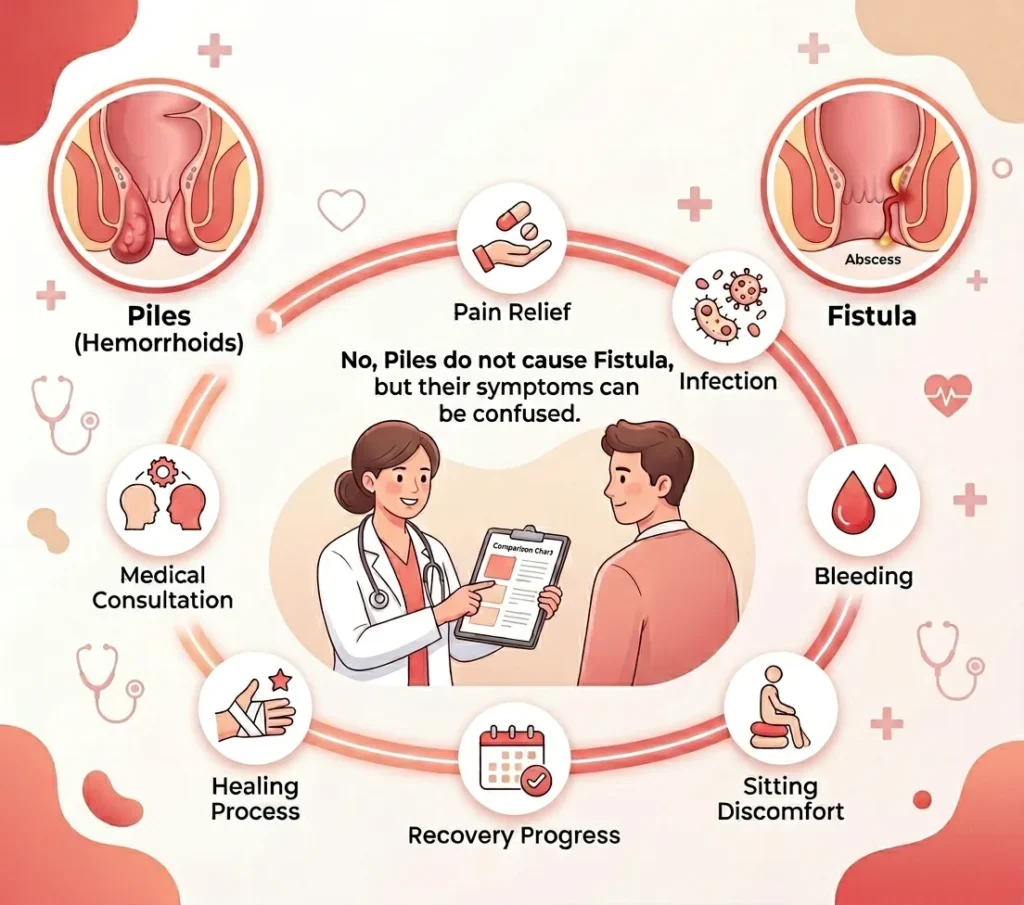
Many people experiencing anal discomfort often confuse piles and fistula because both conditions affect the rectal or anal region and may cause pain, swelling, irritation, or difficulty during bowel movements. One of the most common questions patients search online is:
“Do piles cause fistula?”
The confusion is understandable. Symptoms sometimes appear similar in the early stages, and people often assume every anorectal problem is related to piles. However, piles and fistula are two very different medical conditions with different causes, symptoms, and treatment approaches.
Understanding the difference between Piles and Fistula is extremely important because delaying proper diagnosis may worsen discomfort and lead to complications over time.
In this guide, we’ll explain how piles and fistula differ, whether one condition can cause the other, warning signs patients should never ignore, and why early medical attention matters.
What Are Piles and Why Do They Happen?
Piles, also called hemorrhoids, are swollen blood vessels in or around the anal region. They are one of the most common digestive and lifestyle-related conditions today.
Piles may develop because of:
- Chronic constipation
- Straining during bowel movements
- Low-fiber diet
- Sitting for long periods
- Obesity
- Pregnancy
- Poor bowel habits
People commonly search:
- Causes of piles
- Symptoms of hemorrhoids
- bleeding piles treatment
- painful piles remedies
Symptoms of piles may include:
- Bleeding during stool passing
- Itching
- Swelling
- Pain while sitting
- Discomfort during bowel movements
The severity can vary from mild irritation to more painful stages requiring medical treatment.
What Is a Fistula and How Is It Different From Piles?
A fistula, specifically an anal fistula, is an abnormal tunnel that develops between the anal canal and the skin near the anus. It usually develops because of infection or abscess formation.
Unlike hemorrhoids, fistulas are often linked to:
- Infection
- Pus collection
- Anal abscess
- Inflammation
This is one of the biggest differences between Piles and Fistula.
People frequently search:
- What is an anal fistula
- fistula symptoms
- The difference between piles and a fistula
- fistula causes
Common fistula symptoms may include:
- Pus discharge
- Recurrent swelling
- Pain near the anus
- Skin irritation
- Foul-smelling drainage
- Fever in some cases
Because symptoms overlap slightly, many people initially mistake fistula problems for piles.
Do Piles Cause Fistula?
This is one of the most searched questions online.
In most cases, piles themselves do not directly cause a fistula.
However, confusion happens because:
- Both affect the anal area
- Both may involve pain or swelling
- Patients may self-diagnose incorrectly
A fistula usually develops due to:
- Infection in the anal glands
- Abscess formation
- Untreated anal infections
- Certain digestive conditions
Piles and fistula are separate conditions, although a person may sometimes experience both simultaneously.
Search trends include:
- Can piles turn into a fistula
- Do hemorrhoids cause a fistula
- piles vs fistula symptoms
This is why proper medical diagnosis is extremely important instead of assuming symptoms are “just piles.”
How Can You Tell the Difference Between Piles and Fistula?
Understanding the symptom pattern helps patients recognize important differences.
Piles Symptoms Usually Include:
- Bleeding during bowel movements
- Swelling around the anus
- Itching
- Pain while sitting
- Lump near the anal region
Fistula Symptoms Often Include:
- Pus or fluid discharge
- Repeated infection
- Persistent pain
- Swelling with drainage
- Skin irritation near the opening
One major distinction between Piles and Fistula is that fistulas are more commonly associated with infection and discharge.
People often search:
- How to identify a fistula
- piles or fistula symptoms
- Bleeding piles vs fistula
Since symptoms may overlap, professional evaluation remains the safest approach.
Can Untreated Piles Become Serious?
While piles may not directly cause fistula, untreated piles can still worsen over time.
Possible complications may include:
- Increased pain
- Chronic bleeding
- Prolapse
- Severe discomfort during bowel movements
Searches commonly include:
- What happens if piles are untreated
- complications of hemorrhoids
- severe piles symptoms
Similarly, untreated fistula infections may also become more complicated if ignored.
Early medical consultation helps prevent unnecessary suffering and delays.
Why Do Patients Confuse Piles and Fistula So Often?
There are several reasons why confusion around Piles and Fistula is extremely common:
- Both occur in the anal region
- Pain may feel similar initially
- Patients often avoid discussing symptoms openly
- Internet self-diagnosis creates misunderstandings
Many people also delay visiting specialists because of embarrassment or fear of surgery.
Searches like:
- piles or a fistula, which is worse
- anal pain causes
- swelling near the anus
show how frequently people try to identify conditions themselves before consulting doctors.
Is Bleeding Always a Sign of Piles?
Not necessarily.
Although bleeding during bowel movements is commonly linked with hemorrhoids, other conditions may also cause bleeding, including:
- Fissures
- Infections
- Fistulas in some cases
- Digestive disorders
This is why self-medication without diagnosis can sometimes delay proper treatment.
People commonly search:
- Bleeding during stool causes
- piles bleeding treatment
- When is rectal bleeding serious
Any persistent bleeding should be medically evaluated rather than ignored.
How Are Piles and Fistula Diagnosed?
Doctors usually diagnose these conditions through:
- Medical history review
- Physical examination
- Proctoscopy or anoscopy
- Imaging tests in certain fistula cases
Proper diagnosis helps determine:
- Severity
- Infection presence
- Best treatment approach
Search trends include:
- How doctors diagnose piles
- fistula examination
- anorectal specialist consultation
Accurate diagnosis is one of the most important steps in managing both Piles and Fistula effectively.
What Treatment Options Are Available for Piles and Fistula?
Treatment depends on the condition, severity, and patient health.
Piles Treatment May Include:
- Lifestyle changes
- Fiber-rich diet
- Medicines
- Laser treatment
- Minimally invasive procedures
Fistula Treatment Often Focuses On:
- Infection management
- Surgical correction
- Laser-assisted fistula procedures
- Abscess treatment
People frequently search:
- Laser treatment for piles
- fistula laser surgery
- Best hospital for piles and fistula
- painless fistula treatment
Modern minimally invasive techniques are becoming increasingly preferred for faster recovery and reduced downtime.
Can Lifestyle Habits Increase the Risk of Piles and Fistula?
Yes, lifestyle plays a major role in anorectal health.
Risk factors may include:
- Poor bowel habits
- Low-fiber diets
- Sedentary lifestyle
- Chronic constipation
- Poor hydration
- Delayed treatment of infections
This is why doctors often recommend:
- Drinking more water
- Eating fiber-rich foods
- Regular exercise
- Avoiding excessive straining
Searches related to prevention include:
- How to prevent piles
- foods to avoid in fistula
- best diet for hemorrhoids
Healthy digestive habits may help reduce future complications.
Why Early Medical Attention Matters More Than Self-Diagnosis
Many patients spend months trying home remedies after reading online advice, assuming they only have piles. But because symptoms of Piles and Fistula can overlap, delayed diagnosis sometimes worsens the condition unnecessarily.
Hospitals like Sushrut Piles Hospital focus on specialized anorectal care because early evaluation often helps patients receive more appropriate and timely treatment options before complications increase.
Ignoring symptoms such as persistent swelling, discharge, bleeding, or pain should never become a long-term habit.
Understanding Piles and Fistula Can Help You Seek the Right Care Earlier
Although piles and fistula both affect the anal region, they are different medical conditions with different causes, symptoms, and treatment approaches. Piles generally involve swollen blood vessels, while fistulas are commonly linked with infection and abnormal tract formation.
Understanding the difference between Piles and Fistula helps patients recognize symptoms more accurately and avoid unnecessary delays in seeking medical advice. Instead of relying entirely on self-diagnosis or internet assumptions, timely medical consultation can help identify the real issue and guide patients toward more effective treatment and recovery options.